Uncategorized

🏜️ Dogs Digging Holes at a Desert Campground: What It Means, What We’re Seeing, and Why It Happens

🐕 Dogs Digging Holes at Our Desert Campground

At our desert campground, unusual things are part of everyday life — but one behavior keeps showing up again and again:

Dogs digging holes in the sand and soil.

What starts as a simple scratch in the ground can turn into something much deeper — literally and behaviorally.

This is part of real off-grid living at Colquhoun Entertainment desert campground, where animals, land, weather, and human life all interact naturally.

🏕️ Why Dogs Dig at Campgrounds and Homesteads
Dog digging behavior is extremely common, but it becomes more noticeable in environments like:

  • Desert campgrounds
  • Off-grid homesteads
  • Rural fenced enclosures
  • Hot climate regions

🧠 Common reasons dogs dig:

🌡️ 1. Cooling behavior (hot desert climates)

Dogs often dig into cooler earth to regulate body temperature.

🧠 3. Boredom or stimulation

Limited stimulation in enclosed areas can increase digging activity.

👃 4. Scent tracking

Dogs may dig toward underground smells or movement.

🏜️ 5. Environmental adaptation

In desert ecosystems, digging becomes part of how animals interact with terrain.

🌵 Off-Grid Camping & Animal Behavior

At our desert campground, we see firsthand how off-grid living changes animal behavior patterns.

Unlike suburban yards, here dogs interact with:

  • Open desert soil
  • Natural heat cycles
  • Minimal landscaping barriers
  • Large open pens and fenced spaces

This creates behavior that feels more intense, more frequent, and more unpredictable.

🏕️ Campground Life: More Than Just Camping

This isn’t just camping — it’s ongoing desert homestead living.

Visitors and members experience:

  • Desert camping stays
  • Off-grid lifestyle observation
  • Real-time animal behavior (dogs, wildlife, etc.)
  • Community-based outdoor living
  • Music, events, and desert nights

👉 This is part of the Colquhoun Entertainment campground experience
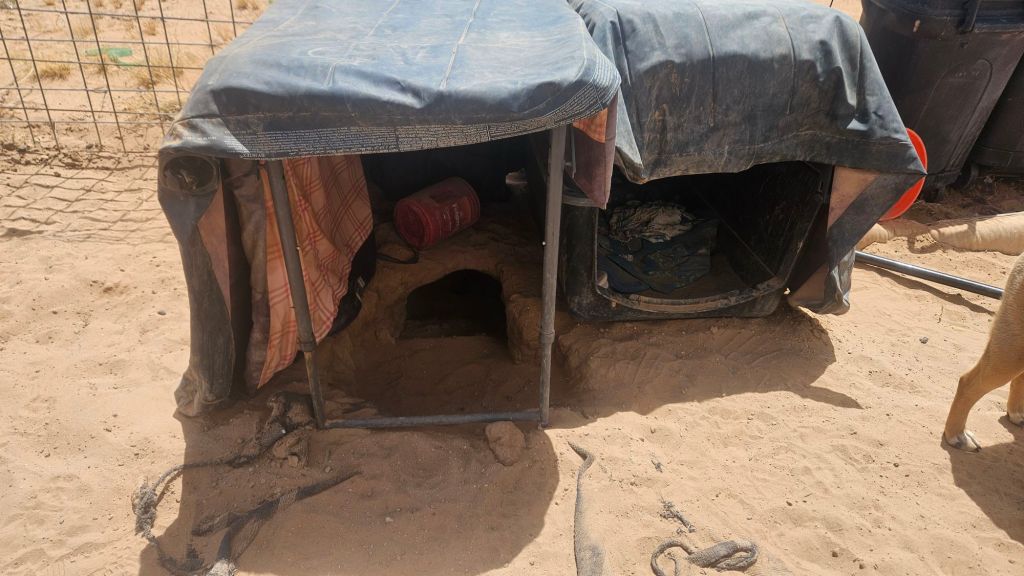
🐾 Dog Digging Behavior at Our Site

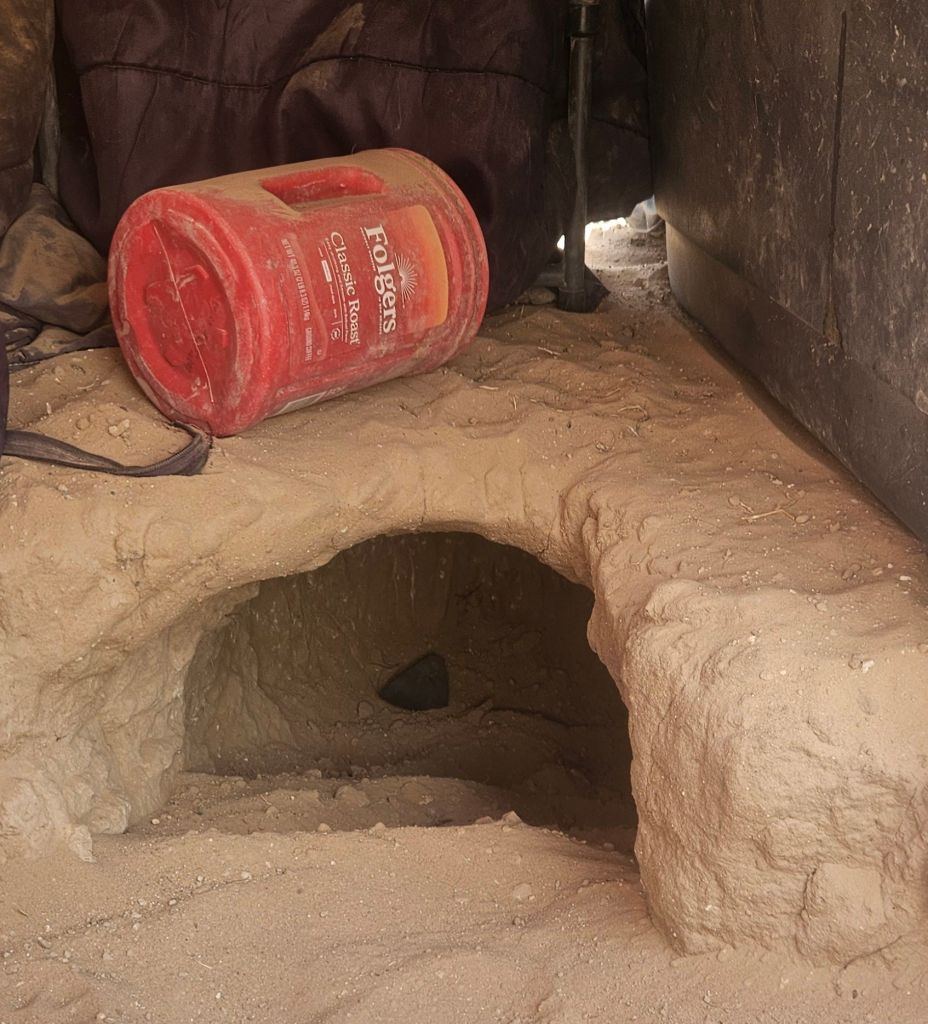
Recently, our dogs began digging in a new area inside their pen, not along the usual fence line.

We observed:

  • Digging starting in the middle of the pen
  • Continuous expansion of the hole
  • Shelter and shade placed over the area
  • Continued digging activity afterward

This is being monitored as part of ongoing animal behavior observation in a desert environment.

🏜️ Camping, Dogs, and Desert Living Combined

What makes this unique is the intersection of:

  • Off-grid campground life
  • Animal behavior in natural desert conditions
  • Homestead-style living
  • Community-based membership experiences

Everything is connected — land, animals, and people all shaping the same space.
Uncategorized

Desert Rescue Dog Pack Living Off-Grid | Dreugan, Persephone, Vibria & Lurch at Plateau Hame de Colquhoun

Life Off-Grid With a Desert Rescue Dog Pack at Plateau Hame de Colquhoun

Living off-grid in the high desert changes how you see animals. Dogs are not just pets here — they are companions, early-warning systems, shadows in the dust, and family members who adapt to wind, silence, heat, and long open land.

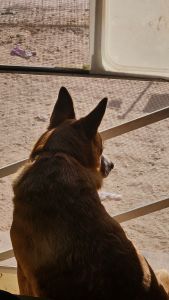
At Plateau Hame de Colquhoun, our lives are intertwined with four rescue dogs: Dreugan, Persephone, Vibria, and Lurch. Each came from a completely different situation. Each carries a different temperament. Together, they formed a working desert pack.

This is the real story of off-grid desert living with rescue dogs — the challenges, the loyalty, the escape artistry, and the personalities that make homestead life unforgettable.

Meet the Desert Pack

🐺 Dreugan — The Blue-Eyed Vocal Husky Rottweiler (Turned 5 on Jan 1)

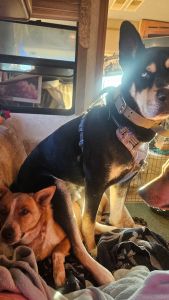
Dreugan and Persephone

Dreugan is our oldest and biggest dog, with piercing blue eyes set against jet-black fur. He is extremely vocal — so vocal that other dogs and even people sometimes misunderstand his intentions.

We picked Dreugan up at just 4 weeks old from a backyard breeder. Two puppies remained. One was friendly and outgoing. Dreugan was hiding, timid, unsure. We chose the one who needed us more.

He grew into:

  • A momma’s boy who doesn’t like losing sight of me
  • A powerful, independent personality (very Husky)
  • An escape artist
  • Affectionate — but on his terms

He has also been the most challenging dog I’ve ever raised. Strong-willed. Smart. Emotional. Loyal.

🐾 Persephone — The Shelter Rescue Who Chose the Pack (Turned 4 in December)

Persephone

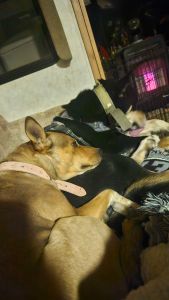
Persephone belongs to our daughter but spends most of her time with us. Rescued from a local animal shelter, she prefers the company of the pack while her mom is at work.

She is:

  • Social and adaptable
  • Calm inside the group dynamic
  • Happiest when surrounded by the other dogs

She chose the desert pack as much as we chose her.

🐕 Vibria — Found in a Box in a Ditch (Almost 2)

Vibria and Dreugan

Vibria and two littermates were found in a box in a ditch on Calhoun Street in Roswell. The vet estimated she was about 3 weeks old.

Raised from nearly nothing, she became:

  • A dog who loves almost everyone
  • Completely attached to us
  • A fence-climbing escape artist if separated

She had the smallest beginning and grew into the most socially fearless dog in the pack.

🐶 Lurch — The Fourth Home and Final Stop (Adopted Last September)

Lurch

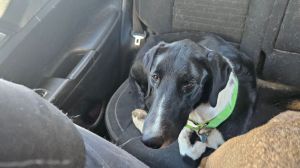
Lurch came from Minnesota. He was my dad’s dog, but due to health reasons, my parents couldn’t keep him. We became his fourth home — and his last.

He wouldn’t respond to his old names (Tippy, Arrow). Too many homes. Too many resets. We renamed him Lurch.

He is:

  • Wary of strangers
  • Deeply affectionate once he trusts you
  • Learning what stability feels like

We’ve set September as his birthday month — a fresh start.

What Off-Grid Desert Life Teaches You About Dogs

Living in the desert with a dog pack teaches you things most people never see:

  • Dogs develop territory awareness naturally
  • Pack hierarchy forms without force
  • Escape artistry is common with intelligent breeds
  • Vocal dogs are often misunderstood
  • Rescue dogs carry emotional histories
  • Loyalty in a remote place becomes very visible
  • Dogs adapt to desert heat, wind, and silence better than people

Why Rescue Dogs Thrive in Homestead and Off-Grid Living

Rescue dogs often do incredibly well in off-grid and homestead environments because:

  • They bond strongly to “their people”
  • They value space and freedom
  • They become guardians of land and routine
  • They form deep pack relationships
  • They are incredibly resilient

Adopt-don’t-shop isn’t a slogan here. It’s visible every day.